Sensei · 9th Dan · World Champion

Avi Rokah lives and breathes budo.

Twenty-seven years as the personal student of Grand Master Hidetaka Nishiyama — five to six hours on the floor, every day. What he received in that room, he now transmits on Pico Boulevard.

1994 World Champion Traditional Karate
5× US National Champion Kumite
9th Dan Shotokan · Nishiyama system
President, WTKF World Traditional Karate Federation
Avi Rokah lives and breathes <em>budo.</em>
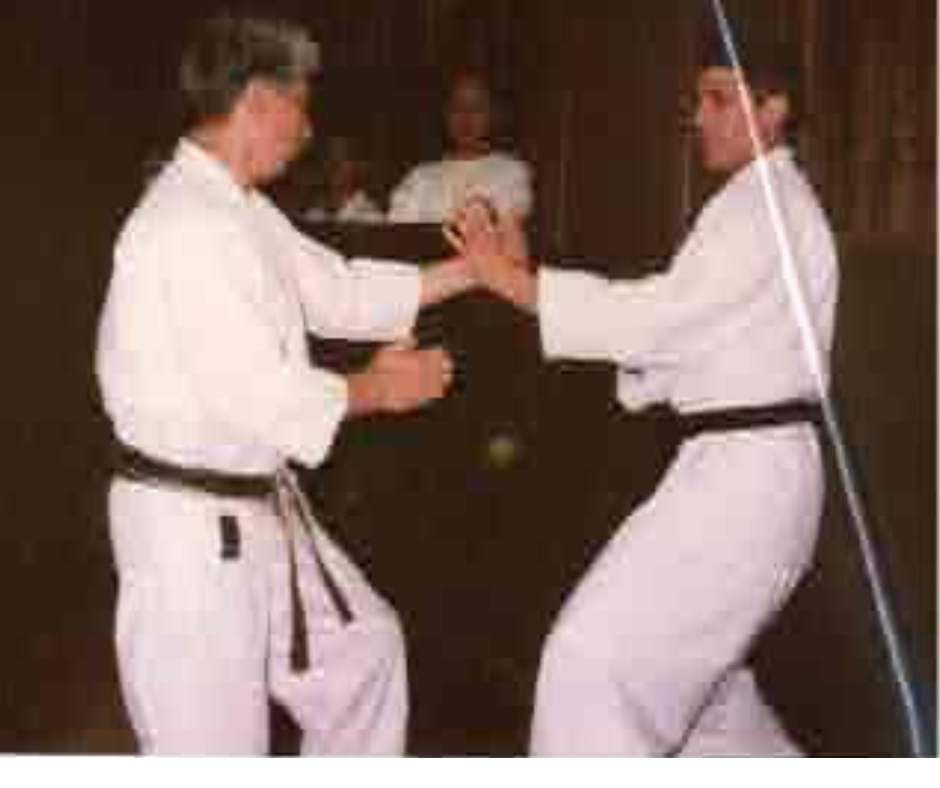
Kumite with Grand Master Nishiyama — the daily practice that shaped everything taught at this dojo.
The Story

He came for six months. He stayed for twenty-seven years.

The story begins in 1981, when a twenty-one-year-old Avi Rokah — already six years into his karate training — arrived in Los Angeles with a plan: train under Hidetaka Nishiyama — the legendary co-founder of the Japan Karate Association and direct student of Gichin Funakoshi, the founder of Shotokan — for six months, then return home. The six months became a year. The year became a decade. The decade became twenty-seven years of daily training, five to six hours a day, until the Grand Master’s passing in 2008.

In that room, karate was not a sport or a workout. It was budo — a discipline for forging the whole human being, where power comes from precision, and victory begins with mastery of oneself. Nishiyama came to regard Avi as his prized student and heir apparent, entrusting him with the finest details of the system he had spent a lifetime refining.

"In karate, the ultimate opponent is oneself. It is about being the best one can be, and improving every day."

Along the way came the medals — the 1994 World Championship, five US national titles — but ask Sensei Avi and he’ll tell you the competition record is a byproduct. The real work was, and remains, the daily polishing of technique and character. Today he serves as president of the World Traditional Karate Federation, teaches seminars across the world, has qualified more than one hundred black belts — and still teaches every adult class at his own dojo personally, because that is what his teacher did.
The Complete Martial Artist

Decades deep — in three arts.

The cross-training programs at Rokah Karate aren't an add-on. They're built on Sensei Avi's own lifetime across striking, grappling, and wrestling.

51

Years of Karate

Training since 1975 — including 27 years, 5–6 hours daily, under Grand Master Nishiyama.

31

Years of Jiu-Jitsu

Three decades on the mats — the ground game studied with the same depth as the standing art.

15

Years of Wrestling

Takedowns, control, and pressure — the bridge between striking range and the ground.

Seminars Worldwide

The world comes to train.

Every year, Sensei Avi teaches seminars across Europe, the Americas, and the Middle East — carrying the Nishiyama transmission to thousands of karateka.

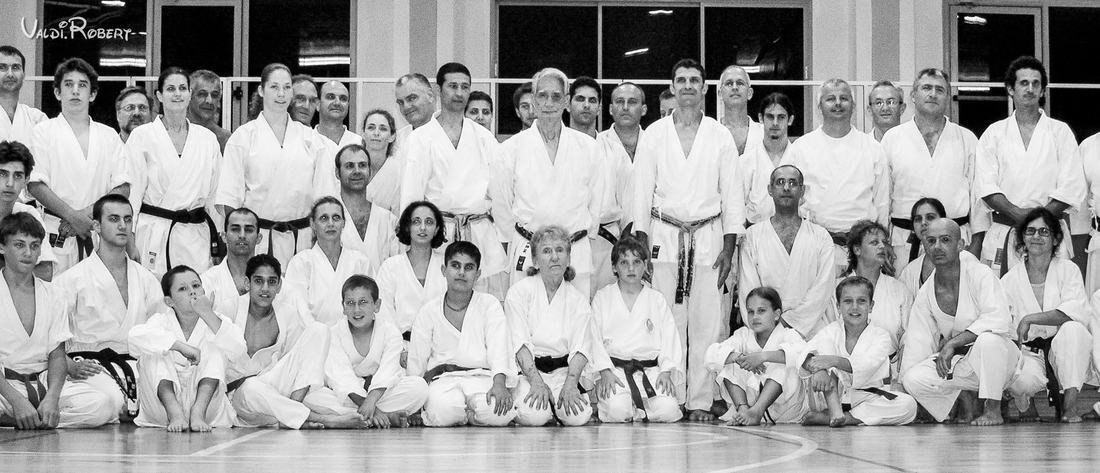
Seminar in Israel with Grand Master Hidetaka Nishiyama
Israel — seminar with Grand Master Hidetaka Nishiyama (center), the teacher whose transmission this dojo carries forward.
Poland — Sensei Avi Rokah seminar
Poland
Ukraine — Sensei Avi Rokah seminar
Ukraine
Germany — Sensei Avi Rokah seminar
Germany
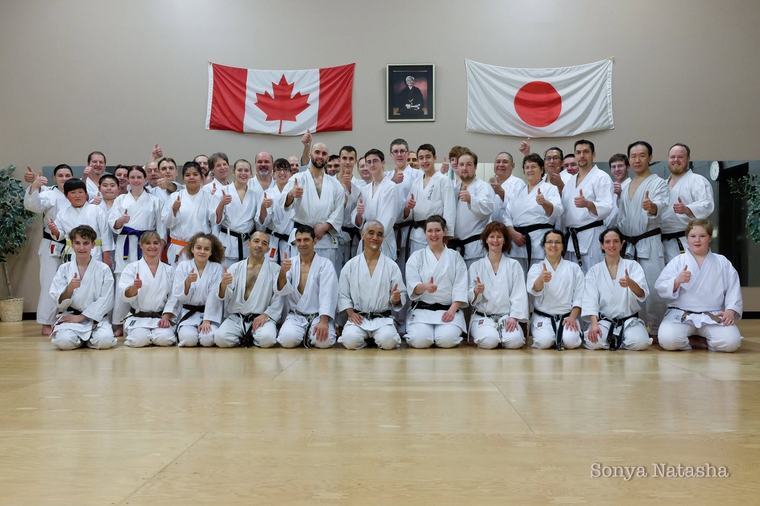
Canada — Sensei Avi Rokah seminar
Canada
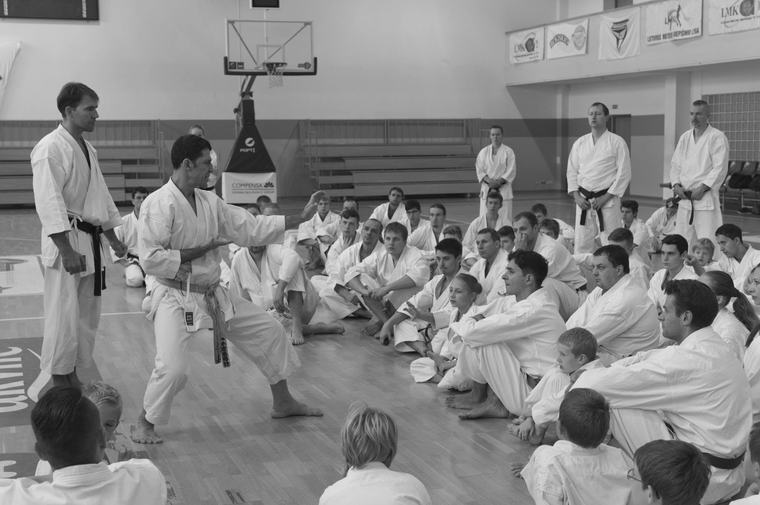
Lithuania — Sensei Avi Rokah seminar
Lithuania
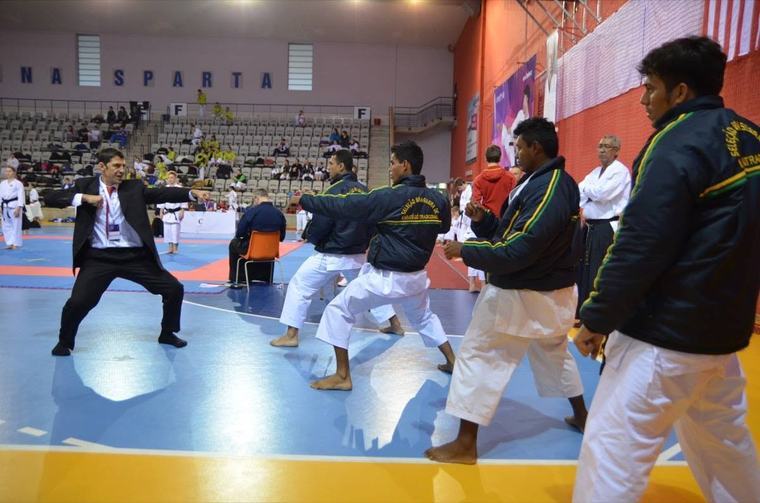
Coaching at the World Championships — Sensei Avi Rokah seminar
Coaching at the World Championships
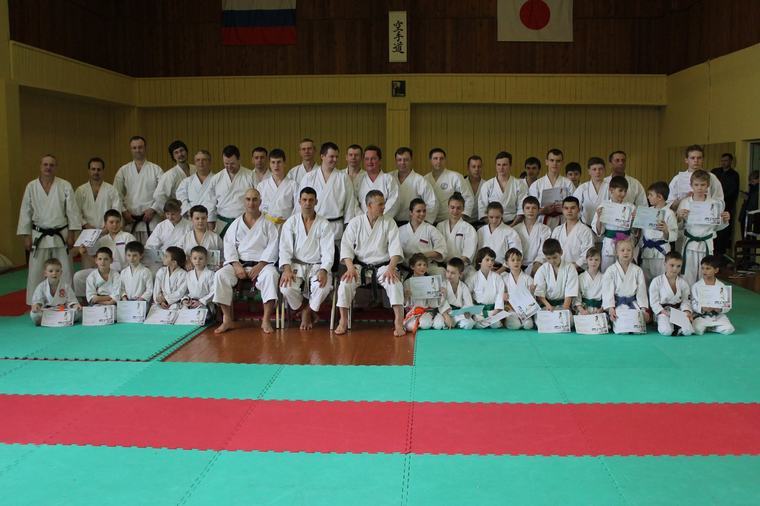
Russia — Sensei Avi Rokah seminar with kids and adults
Russia
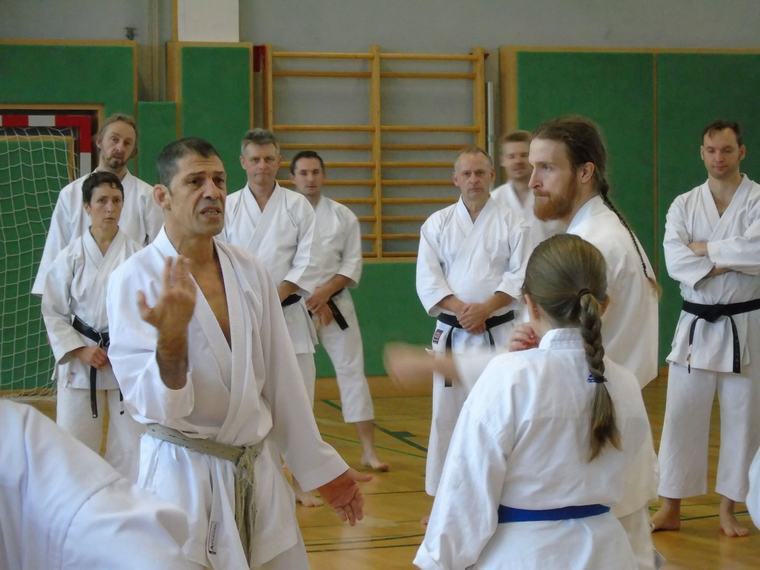
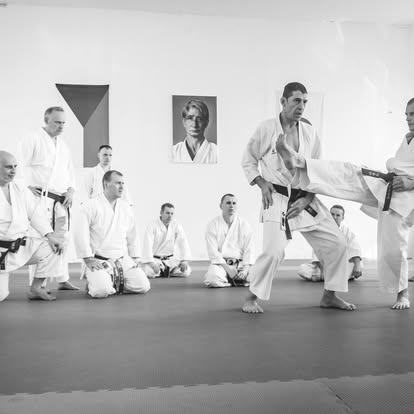
Czech Republic — instructors' seminar with Sensei Avi Rokah demonstrating
Czech Republic — Instructors' Seminar
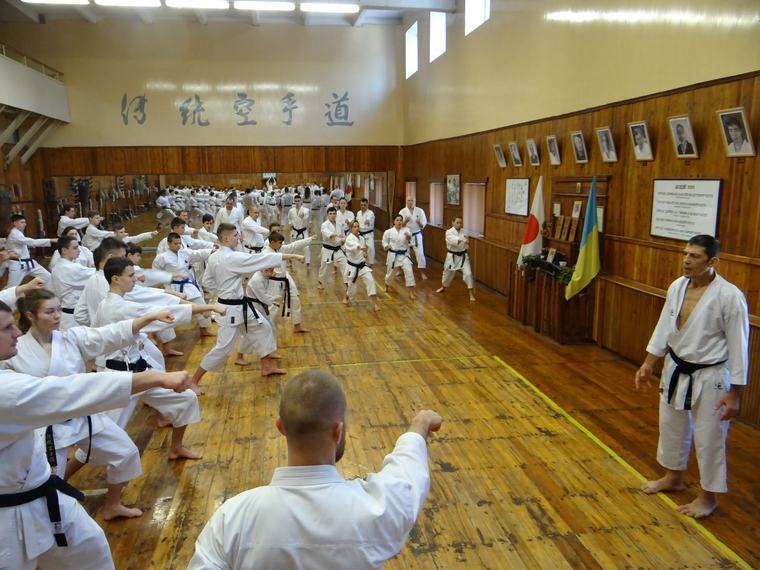
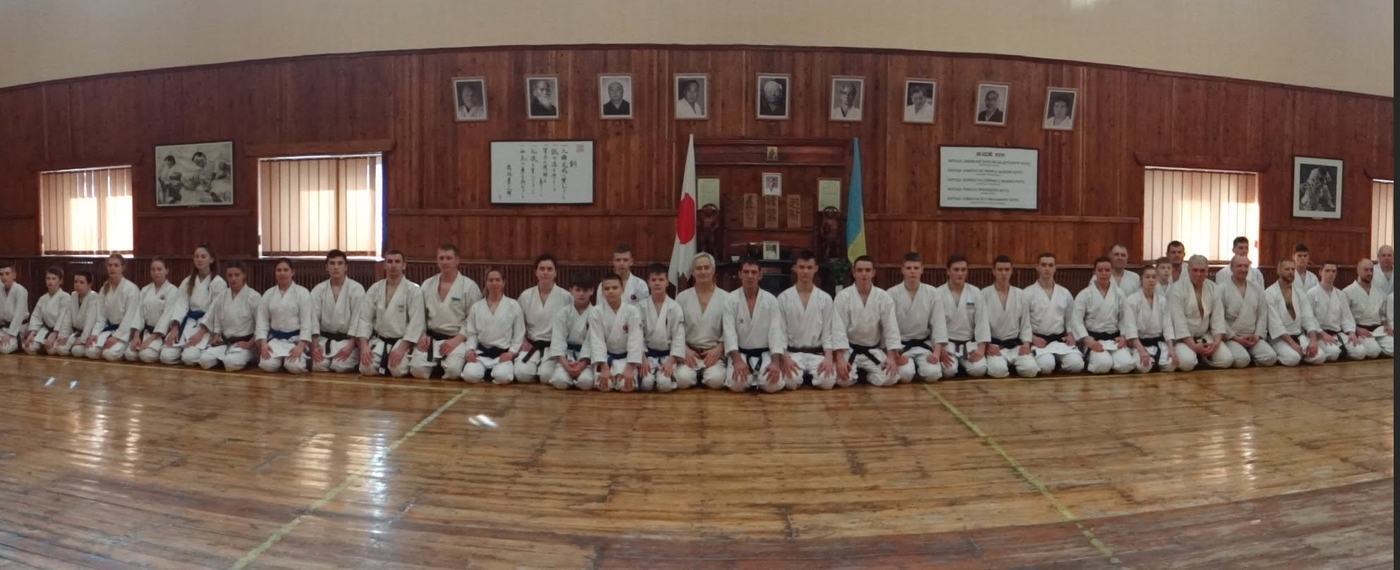
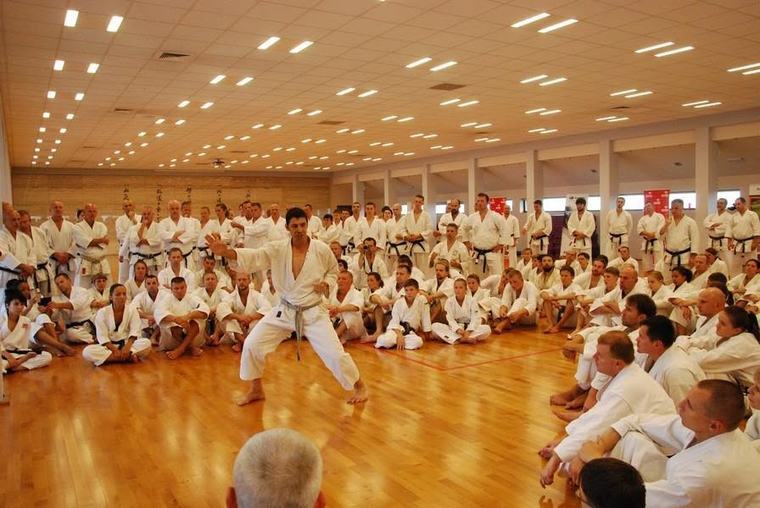
Panoramic seminar group in Ukraine
Ukraine — seminar group
Record & Recognition

The résumé, in brief.

1994 World Champion Traditional Karate
5× US National Champion Kumite
9th Dan Black Belt Shotokan · Nishiyama system
27 Years Under Nishiyama Personal student & heir apparent
100+ Black Belts Qualified At Rokah Karate
President, WTKF World Traditional Karate Federation
US Team Head Coach National team
Seminars Worldwide Sought-after instructor across many countries
Common Questions

Frequently asked questions.

What is Shotokan karate?

Shotokan is a traditional Japanese style of karate built on precise technique, deep stances, and generating power through the whole body rather than the arm alone. It emphasizes form and principle over tricks. As fighting, Shotokan is built on timing and distance control rather than speed and athleticism — if the opponent cannot hit you, it does not matter how strong they are.

The founder of Shotokan, Master Gichin Funakoshi, was my teacher’s teacher. Sensei Nishiyama developed the first instructors course in Japan and then sent its top graduates to teach around the world. That is how Shotokan spread.

How is traditional karate different from most martial arts schools?

Most schools teach karate as a sport or an activity; we teach it as a study. The difference shows up in what gets corrected. In a sport school, a technique is right if it scores. Here a technique is right if the body is organized correctly behind it, whether or not it lands. That takes longer and it is less immediately satisfying. It is also why students are still finding new things in the same movement twenty years in.

When karate became popular it was taught as sport, rather than as the refinement of technique, timing, and Budo principles. Sensei Nishiyama insisted on Budo principles and on teaching karate as it was originally meant to be. That is what we teach here.

Who teaches the classes?

Sensei Avi Rokah teaches every adult class personally — 9th Dan in Shotokan karate, 1994 world champion, and President of the WTKF. Ruth Rokah teaches the children’s classes alongside him, assisted by Jakob Rokah, a two-time US champion. Andre Monge Johnson, an MMA fighter and jiu-jitsu and karate competitor, also assists with the children’s classes and teaches jiu-jitsu alongside Felipe Werdum. Vlad Matyushenko co-teaches the MMA program.

What does training under Nishiyama for 27 years mean for what's taught here?

Sensei Hidetaka Nishiyama was a direct student of Master Gichin Funakoshi, the father of modern karate and the founder of Shotokan. He co-founded the Japan Karate Association, taught the most well-known Shotokan instructors to come out of Japan, and is widely considered the finest technician the style has produced.

I trained under him for 27 years, from 1981 until he passed in 2008, five hours a day. Every training was demanding. We did endless repetitions, and every repetition was purposeful. He did not want us to copy him — he wanted us to understand the principles underneath. You could be his student and he still would not teach you until you had proven yourself worthy of it.

The dojo was always full of people who had come from around the world to train there, and it was a privilege to be in that room every day. In every class he pushed us past limits we did not know we had. He was like a father to me, and an example of what passion and dedication for karate look like over a lifetime.

I still hear him while I train. “Don’t do the convenient way, do the right way” — meaning don’t move out of habit just because it works; look for what is correct. And “don’t use eyes” when fighting — don’t analyze, trust your heart, your intuition, your experience.

Carrying that forward is an obligation, not a credential. It is what this dojo is for.

Karate, jiu-jitsu, or MMA — how do I choose?

Karate and jiu-jitsu are both effective martial arts — karate focuses on striking, jiu-jitsu on grappling. Start with what you want from it. Karate suits someone who wants a lifelong study with depth; it rewards patience and gives back more the longer you stay, and as self-defense it focuses on striking and the stand-up game. Jiu-jitsu as self-defense focuses on ground fighting. MMA is for someone who wants to train across all ranges, standing and on the ground. Karate and jiu-jitsu are scheduled back to back on Monday and Wednesday for students who want both. If you’re still unsure, come to a class and see which one you don’t want to leave.

Train with him. Not near him — with him.

Sensei Avi teaches every adult class personally. Your first one is free.

Book Your First Class